South Florida homeowners deal with conditions that can make exterior surfaces look dirty much faster than they might in other parts of the country. High humidity, frequent rainfall, intense sunlight, coastal salt air, leaves, dirt, algae, and other organic material can all contribute to buildup on a home’s exterior. Regular exterior cleaning can help keep a property looking well maintained, but not every surface should be cleaned in the same way. Some materials can tolerate pressure washing, while others require a lower-pressure cleaning method to avoid damage. Understanding which surfaces should be cleaned regularly and which cleaning method is appropriate can help South Florida homeowners protect their property while keeping it looking its best.
Why Does South Florida Have So Much Exterior Buildup?
South Florida’s warm, humid climate creates conditions where moisture and organic growth can become common on exterior surfaces. Areas that stay damp or receive limited direct sunlight can be especially susceptible to algae, mildew, and other biological growth. Rain can also leave behind dirt and debris, while properties near the coast may experience additional exposure to salt and airborne moisture.
This means exterior cleaning in South Florida is not necessarily just about appearance. Dirt, organic growth, and other buildup can accumulate on driveways, sidewalks, patios, walls, fences, roofs, and other exterior areas. Regular cleaning can be part of a property’s broader preventative maintenance routine.
How Often Should a Home Be Pressure Washed?
There is no single schedule that works for every South Florida property. The appropriate cleaning frequency depends on the material, surrounding landscape, amount of shade, proximity to the coast, rainfall, and how quickly dirt or organic growth accumulates.
Some properties may benefit from annual exterior cleaning, while other surfaces may only need attention when visible buildup appears. A home surrounded by trees and shaded areas may develop algae or mildew more quickly than a property with substantial direct sunlight. Coastal properties can also experience different types of exterior buildup than properties farther inland.
Instead of pressure washing everything on a fixed schedule, homeowners can inspect exterior surfaces periodically and clean them when dirt, staining, algae, mildew, or other buildup becomes noticeable.
Driveways and Concrete
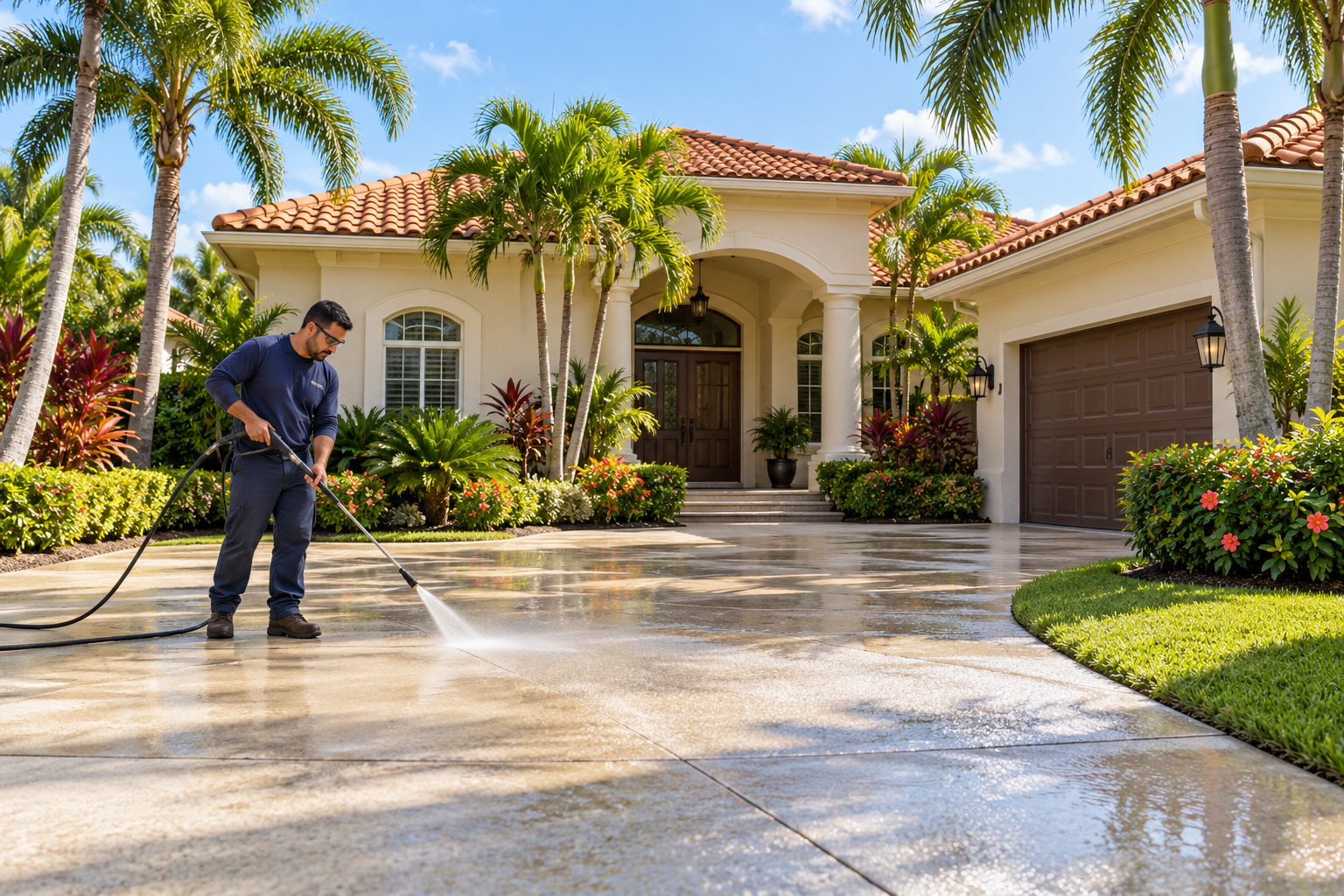
Driveways are among the most common surfaces to benefit from pressure washing. Concrete is porous, meaning dirt and other material can become embedded in the surface over time. Oil spots, tire marks, mud, algae, and other stains can also make a driveway appear older and dirtier.
Regular cleaning can help maintain the appearance of concrete driveways and walkways. In South Florida, shaded concrete can also become slippery when algae or other organic growth accumulates, making periodic cleaning an important part of exterior property maintenance.
However, pressure does not automatically make a cleaning job better. Excessive pressure or an inappropriate nozzle can damage concrete, particularly if the surface is already deteriorated, cracked, or spalling. A professional should select the pressure and cleaning method based on the condition of the concrete.
Sidewalks and Walkways
Sidewalks and walkways are exposed to many of the same conditions as driveways. Dirt, leaves, mud, algae, and other organic material can accumulate over time, particularly in areas that remain damp or shaded.
Cleaning these surfaces can improve their appearance and remove accumulated material. Homeowners should pay particular attention to walkways around pools, entrances, patios, and other areas where people regularly walk.
As with driveways, the appropriate pressure depends on the condition of the surface. Older or damaged concrete should be evaluated before high-pressure cleaning.
Patios and Pool Decks
Outdoor patios and pool decks are another area where regular cleaning can make a noticeable difference. South Florida homes often make extensive use of outdoor living spaces, and these areas are exposed to rain, humidity, sunscreen, dirt, leaves, and other debris.
Pool decks can also develop algae and other organic growth when moisture remains on the surface. Cleaning can help remove buildup, but homeowners should be careful about the type of surface surrounding the pool. Concrete, pavers, tile, natural stone, and other materials have different cleaning requirements.
Pressure washing a pool deck without considering the material can potentially damage joints, coatings, grout, sealants, or softer surfaces. The cleaning method should be selected based on the specific material rather than simply using the highest pressure available.
Pavers
Paver driveways, patios, walkways, and pool decks are popular throughout South Florida. Over time, sand, dirt, algae, weeds, and other organic material can accumulate between and on top of the pavers.
Pressure washing can be used on many types of pavers, but the process requires care. Excessive pressure can remove joint sand or disturb the surface. After cleaning, some paver installations may require additional joint sand and, depending on the system and homeowner’s goals, sealing.
Because pavers can vary in material and installation method, the cleaning approach should be appropriate for the specific surface.
Exterior Walls and Siding
Exterior walls can collect dirt, dust, algae, mildew, and other environmental buildup. However, homeowners should not assume that the same pressure used on concrete is appropriate for the exterior walls of a house.
Vinyl siding and other exterior finishes may be damaged by excessive pressure or improper technique. Stucco, which is common in Florida construction, also requires particular care. High-pressure water can potentially damage the surface or force water into areas where it does not belong.
For many house exteriors, a lower-pressure cleaning approach, commonly called soft washing, may be more appropriate than traditional high-pressure cleaning. Soft washing uses cleaning solutions and controlled water pressure to remove organic growth and surface contaminants without relying solely on high mechanical pressure.
Stucco
Stucco homes are extremely common in Florida, but stucco should not be treated like a concrete driveway. The material can have a textured surface and may contain areas where water can penetrate if the cleaning process is too aggressive.
Before cleaning stucco, it is important to evaluate the condition of the surface. Cracks, damaged areas, deteriorated finishes, and openings around windows or other penetrations should be considered before water is applied.
A professional exterior cleaning company may use a lower-pressure method for stucco rather than blasting the surface with high pressure.
Fences
Fences can accumulate dirt, algae, mildew, and other organic material. The appropriate cleaning method depends heavily on the fence material.
Vinyl fencing can generally be cleaned with a suitable low-pressure method and cleaning solution. Wood fencing requires more care because excessive pressure can damage the wood fibers, leaving the surface rough or scarred. Metal fencing may have painted or coated surfaces that also require appropriate pressure and cleaning methods.
Before pressure washing a fence, homeowners should identify the material and consider its age and condition.
Decks
Wood decks require particular attention because wood is softer than concrete and can be damaged by excessive pressure. Aggressive pressure washing can leave visible marks, strip the surface, or damage the wood fibers.
If a wooden deck needs cleaning, the pressure and technique should be appropriate for the type and condition of the wood. A professional may use a lower-pressure cleaning method rather than treating the deck like a concrete surface.
Composite decking also requires the manufacturer’s cleaning recommendations to be followed. Different composite products can have different maintenance requirements.
Garage Floors
Garage floors can accumulate dirt, dust, tire marks, oil, and other contaminants. Concrete garage floors can often be cleaned with appropriate pressure-washing equipment, although oil and grease stains may require a suitable cleaning product in addition to water.
Homeowners should also consider where wastewater and cleaning solutions will go. Exterior cleaning should be performed in a way that complies with applicable local requirements and avoids allowing contaminated water to enter areas where it should not.
Roofs: Why Pressure Washing May Not Be the Right Choice
Roof cleaning is one of the most important areas where homeowners should understand the difference between pressure washing and soft washing. A roof should not automatically be cleaned with the same high pressure used for concrete.
Many roofing materials can be damaged by aggressive pressure washing. Asphalt shingles, for example, can be affected by improper cleaning techniques. Roof manufacturers may also provide specific maintenance instructions that should be followed.
For many roofs, a properly performed soft-washing process is more appropriate than traditional high-pressure cleaning. The objective is to remove algae, moss, or other organic buildup while minimizing the risk of damaging the roofing material.
Homeowners should also be aware that roof cleaning can involve significant fall and ladder hazards. Professional roof-cleaning services can help reduce the need for homeowners to climb onto the roof themselves.
Why Soft Washing Matters
The terms “pressure washing” and “soft washing” are sometimes used interchangeably, but they are not necessarily the same process. Pressure washing relies primarily on mechanical pressure to remove contaminants. Soft washing generally combines cleaning solutions with lower water pressure to address organic growth and surface contaminants.
The right approach depends on the surface. Concrete may tolerate higher pressure than stucco, wood, siding, or roofing materials. Using excessive pressure simply because a surface is dirty can create unnecessary damage.
A professional cleaning company should evaluate the material and condition of the surface before selecting the equipment, pressure, nozzle, and cleaning solution.
How Often Should South Florida Homes Be Cleaned?
For many South Florida homeowners, an annual exterior inspection and cleaning plan is a practical starting point. However, individual surfaces may need attention at different intervals.
Driveways and sidewalks may show dirt and organic growth relatively quickly. Pool decks and patios may require regular cleaning because they are frequently exposed to moisture and outdoor activity. Exterior walls may need cleaning when algae or mildew becomes visible. Roofs should be maintained according to the roofing material and manufacturer’s recommendations rather than automatically pressure washed every year.
Properties near the coast, homes surrounded by vegetation, and properties with significant shade may require more frequent attention than properties in drier or more open locations.
The best approach is to monitor the property rather than relying exclusively on a one-size-fits-all schedule.
What Happens If You Never Clean Exterior Surfaces?
Exterior surfaces do not necessarily need to be pressure washed simply because they are dirty, but allowing organic growth and accumulated debris to remain for long periods can make maintenance more difficult.
Algae, mildew, dirt, and other contaminants can make surfaces appear stained or neglected. Organic growth can also contribute to slippery conditions on some walkways and outdoor surfaces.
Regular inspection allows homeowners to identify buildup before it becomes a more significant cleaning challenge. It also gives homeowners an opportunity to identify cracks, damaged coatings, deteriorated caulking, loose materials, or other maintenance issues that may otherwise go unnoticed.
Should Homeowners Pressure Wash Before Selling a Home?
Exterior cleaning can be a useful part of preparing a property for sale. Clean driveways, sidewalks, patios, fences, exterior walls, and other outdoor areas can make the property appear better maintained.
However, pressure washing should not be used to hide property defects. Cracks, damaged concrete, deteriorated stucco, roof problems, or other maintenance issues should be evaluated separately.
For homeowners preparing to sell, an exterior maintenance inspection can help identify which surfaces need cleaning and which require actual repair.
Can You Pressure Wash Everything Around Your House?
No. One of the biggest misconceptions about pressure washing is that the same equipment and pressure can be used on every surface.
Concrete, pavers, wood, stucco, siding, roofing materials, painted surfaces, and natural stone can all have different cleaning requirements. Using excessive pressure or the wrong cleaning solution can damage a surface instead of improving it.
The safest approach is to identify the material first, evaluate its condition, and then select a cleaning method appropriate for that material.
The Bottom Line
Regular exterior cleaning is an important part of maintaining a South Florida property, but pressure washing should not be treated as a one-size-fits-all service. Concrete driveways, sidewalks, patios, pool decks, pavers, fences, exterior walls, and other surfaces can accumulate dirt, algae, mildew, and organic debris and may benefit from periodic cleaning. The timing depends on the property’s location, surrounding environment, surface material, and amount of buildup.
Just as important as knowing what to clean is knowing how to clean it. Concrete may tolerate pressure-washing techniques that would be inappropriate for stucco, wood, siding, or roofing materials. Some surfaces may be better suited to soft washing or another low-pressure cleaning method.
For South Florida homeowners, incorporating exterior cleaning into a broader preventative maintenance plan can help keep a property looking maintained while providing an opportunity to identify surface damage and other maintenance concerns before they become larger projects. When in doubt, have the surface evaluated before cleaning so the appropriate method can be selected for the material and condition of the property.
Need Help Maintaining Your South Florida Home?
Contact Joe Hillman Maintenance & Construction to discuss your exterior cleaning and home maintenance needs. Call 954-473-1400 or request service online.
Need reliable commercial or residential repairs in South Florida?
Need reliable commercial or residential repairs in South Florida?
Trust Joe Hillman Maintenance & Construction—delivering expert carpentry, maintenance, cabinet repair, tile installation, and more since 1987. Contact us today for dependable, long-lasting results.